
Trace Former Owners in Prince George
Each era of Prince George County property records calls for its own route. Recent decades work well through a remote land-record index. The Clerk enables Virginia SRA access there. The county publishes no confirmed start year or image cutoff for that online index. Earlier eras live in the Library of Virginia. It lists local deed books, general indexes, plat volumes and surveyor records across several periods. A matching name is only a clue. Before calling a find the same parcel, compare the written land description, acreage, road and adjoining owners. That is how a Prince George County property search avoids false links.
| Record source | Known coverage | Where held | Use in a chain |
|---|---|---|---|
| Virginia SRA / COVERS | Prince George cutoff not stated | Remote index or Clerk counter | Search by grantor and grantee; image availability depends on the Clerk |
| General Index to Deeds | 1842-1953; A-C segment for 1954-1976 | Library of Virginia microfilm | Names to use when moving between deed books |
| Surviving deed books | 1710 forward in listed runs; 1865-1903 for Books 27-45 | Library of Virginia and ARVAS | Transfers, parties, residences and land descriptions |
| Plats and surveys | About 1711-1724; Plat Books 1-3, 1894-1917 | Library of Virginia, Clerk and county GIS | Lot, road, creek and boundary context |
Work backward from the newest deed in the land index. One transfer at a time. For an older link, the general deed index points you to a volume. Then you pull the book or microfilm reel. Old descriptions may rely on vanished roads, creeks or neighbor names. Surveyor records and chancery material can supply that context when a modern street address cannot. Do not assume the county's remote index reaches the same decades as the archival microfilm. The coverage rarely matches.
Walk the Prince George Deed Chain
A deed chain links each recorded transfer to the one before it. Every grantee becomes the search clue for the next step back. Begin with the current deed. Note the grantor, the recording date, the book/page or instrument number, and the legal description. Then search that grantor as a prior grantee. Repeat the step. This builds a true sequence of former owners. It avoids a pile of people with similar names. Test each link in the Prince George County deed records against land calls, acreage, roads, and adjoining owners.
- Locate the newest known deed and capture its grantee, grantor, date and record reference.
- Read the legal description and note adjoining roads, streams or named properties.
- Search the grantor as an earlier grantee, including name variants and entity or fiduciary names.
- Compare the next deed's description and acreage with the parcel before continuing.
- Move to the Library of Virginia's general indexes and volumes when the remote record stops.
- Grantor
- The party transferring the stated land interest.
- Grantee
- The party receiving that interest in the deed.
- Chain of title
- The ordered sequence of documents used to trace ownership.
- Legal description
- The written land description that helps match an old deed to a modern parcel.
Prince George Ownership Records Over Time
Prince George County was formed from Charles City County in 1703. The Library of Virginia holds Deed Book B from 1710-1713 plus other early volumes. But the losses are severe. Most court records were destroyed in 1782 and again in 1864. Deed Books 25 and 26 are missing too. So a chain of former owners may depend on probate, chancery, surveyor or adjoining-owner records to survive the gaps. The earliest year available through SRA online is not stated in public sources, so treat any online property search as incomplete rather than exhaustive.
Lawful use. Use former-owner research for land history, estate work and property diligence. Do not use names or addresses to track, threaten or harass a living person.
Prince George Deed Indexes and Years
Prince George deed research starts with the General Index to Deeds. That index sits at the Library of Virginia. Coverage runs from 1842 through 1953. It is split across reels grouped A-D, E-K, L-S and S-Z. A separate reel picks up A-C for 1954 to 1976. The published description gives no ending coverage beyond that. Remember what an index is: a locator, not the deed itself. A reference line can point you to the right instrument. But only the book or image shows the parties, the land description and the terms of the transfer.
Before you pull a deed volume, record the name spelling. Note the reel, the date range and the book and page. Those details take you straight to the instrument. Tracing former owners means following the citation. One index line is not the whole story. Common surnames demand care; compare residences and adjoining owners to separate families. If a expected transfer never surfaces, swap the grantor and grantee roles and search again. Try fiduciary or estate terms as well.
Prince George's Lost Deed Books
Title history here carries an unusual burden of loss. British troops destroyed most court records in 1782, and Union troops struck again in 1864. The Library of Virginia specifically names deed Books 25 and 26 as missing. A surviving book or fragment cannot prove that no transfer happened during a gap. Never draw that conclusion. When a volume is absent, a chain may still be built from land descriptions, chancery files, wills, surveyors' books, processioners' reports and references inside later deeds.
Prince George is recognized as a Lost Records Locality. The ARVAS surviving deed-books finding aid describes the books still extant from 1713 to 1792. Keep every gap explicit in your notes. Let a title professional judge what can and cannot be established.
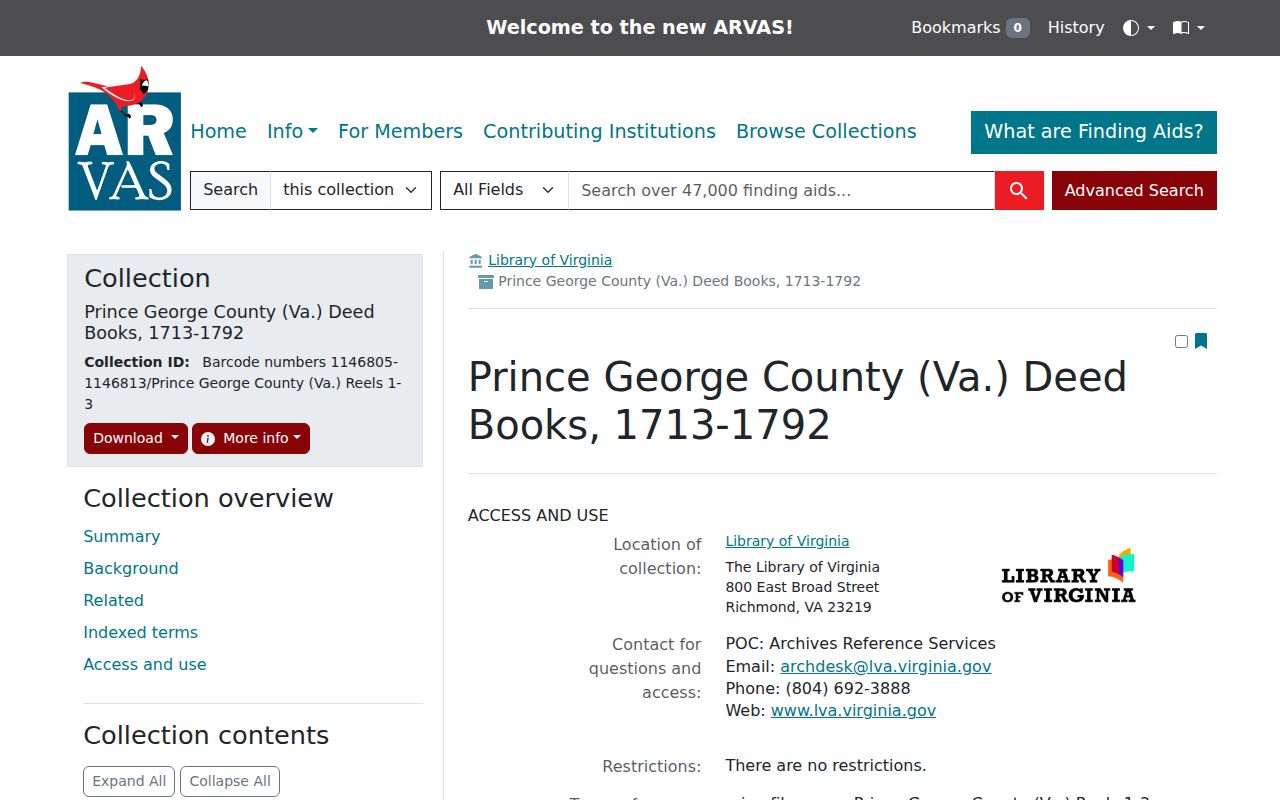
The finding aid describes surviving volumes and their history. It cannot reconstruct a missing deed or certify a complete chain.
Old Prince George Descriptions and Plats
Old legal descriptions lean on features no mailing address contains. A road, creek, hundred, plantation, church or adjoining owner may tie an early deed to a modern parcel. A former owner of record can surface through that geographic clue when no street address existed yet. The Library of Virginia lists a surveyors' plat book from about 1711-1724, Plat Books 1-3 covering 1894-1917, surveyor records from 1794-1879, and processioners' reports from 1869-1889.
Before searching any index, list every road, watercourse, acreage and neighbor name in the older description. Use the plat reference to test the lot's shape and location. Then set the description beside a modern deed in the Prince George County property records. The Library of Virginia microfilm inventory catalogs these collections.
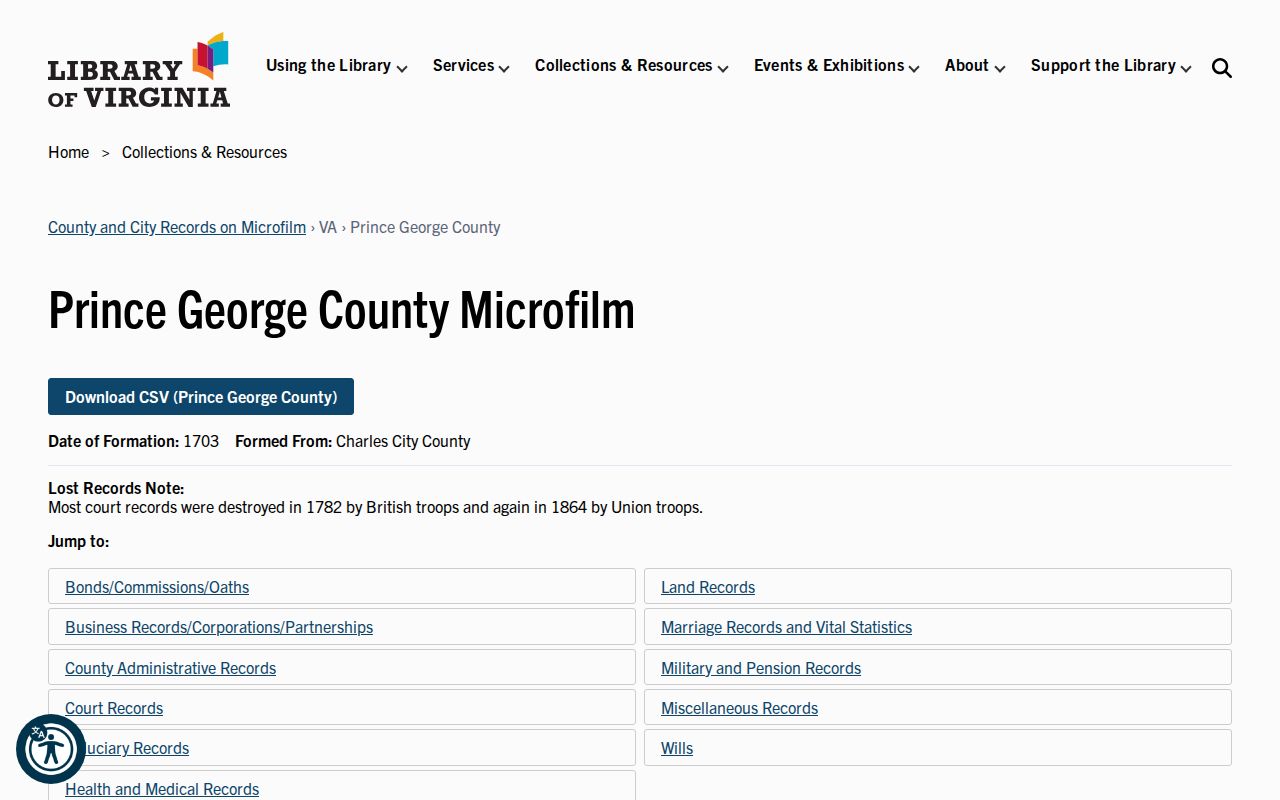
Finding aids locate the source; originals prove the fact. A microfilmed or original description remains the evidence to actually read.
Estate Transfers in Prince George Chains
Deed-only chains can snap at a death. When a former owner died, land often moved through a will, a probate file, or a fiduciary record. That shift came long before any later instrument named the successor. The Circuit Court Clerk's office links probate and holds the wills and estate papers. Library of Virginia catalogs the key indexes. Will Books 1 and 2 together cover 1865 through 1926. An Index to Wills and Fiduciaries runs from 1847 to 1991. A List of Fiduciaries covers 1865 through 1906. Search the decedent first. Then trace the personal representative, the estate, and the heirs. Use the later land records in Prince George County for that step.
The assessor's owner of record can lag for years. Often the name stays unchanged until a fiduciary deed or court order is finally recorded. Chancery causes add context on divisions and inheritances. The ARVAS finding aid covers Prince George cases from 1745 to 1956. Most records fall between 1869 and 1916. The chancery catalog can help identify a file. Not every case image amounts to a deed transfer, though.
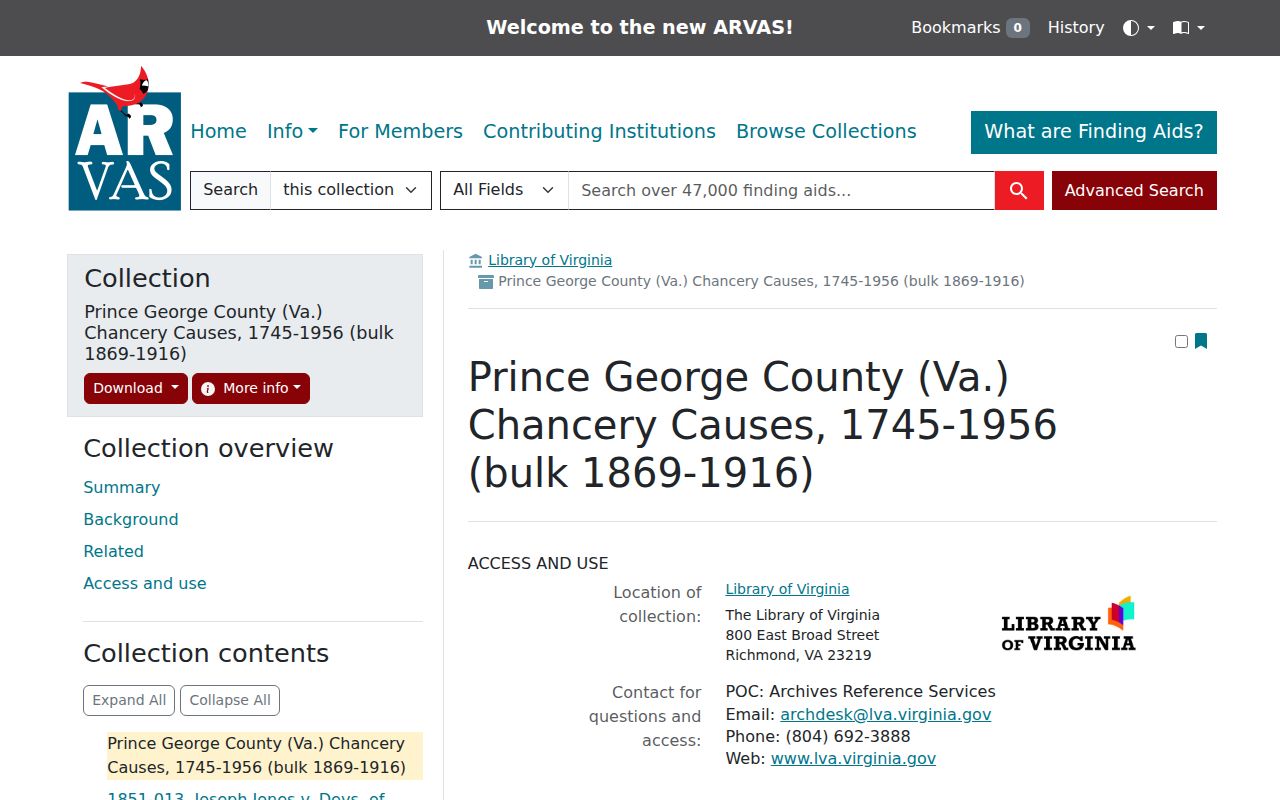
Start with the case file. It explains the land division or the fiduciary role behind a transfer; the deed or court order then records the resulting interest.
Prince George Archive Search Fallbacks
A dry spell in the remote deed index is not the end. Never settle for one spelling. Try both party roles, legal-name variants, fiduciary names, and adjoining owners, because Prince George research rewards persistence. When a link to a previous owner is missing, move from the general index to the deed book it cites. Check plat and surveyor references too. Add wills, fiduciary indexes, and chancery for estate transfers.
That sequence matters because Prince George County's historic losses and missing volumes often leave a direct link absent, making a second route normal rather than a dead end. Library of Virginia lends microfilm and finding aids. Many reels carry interlibrary-loan indicators. ARVAS lists the early deed books with no restrictions. Its Archives Reference Services answers questions at archdesk@lva.virginia.gov or (804) 692-3888. FamilySearch adds catalog results, though access conditions depend on the item; for current recorded deeds, the Prince George deed records page covers the Clerk and SRA access choices.